

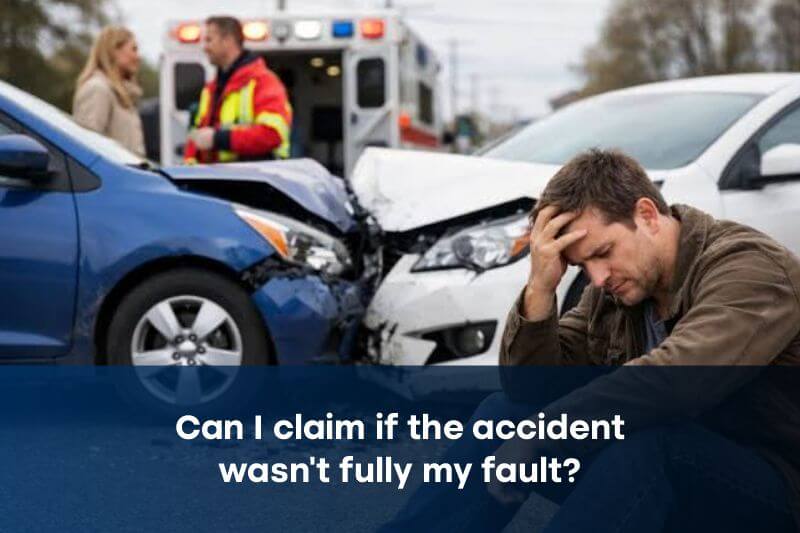
If you’ve been injured in an accident and you’re worried that you contributed to what happened, you may be asking yourself one urgent question: can I still claim compensation if the accident wasn’t fully my fault? The short answer is yes. Under UK personal injury law, you do not need to prove the other party was 100% responsible to bring a successful claim. Many accidents involve shared responsibility, and the law has a clear, well-established framework for dealing with exactly this situation.
At JIVA Solicitors, we speak to injured people every week who assume that any degree of personal responsibility rules out compensation entirely. This assumption stops genuine claimants from getting the financial support they need to recover, whether that’s covering medical treatment, lost income, or rehabilitation costs. It is rarely true, and believing it can cost you thousands of pounds in compensation you are legally entitled to.
This article explains exactly how partial fault claims work in the UK, how compensation is calculated when responsibility is shared, what evidence strengthens your case, and why speaking to an experienced personal injury solicitor early makes a genuine difference to your outcome. Whether your accident happened on the road, in the workplace, or in a public space, the principles below apply directly to your situation.
Can You Claim Compensation If You Were Partly Responsible?
Yes, you can claim compensation even if you were partly responsible for the accident that caused your injury. UK law recognises that accidents are rarely one-sided, and it allows injured people to recover compensation proportionate to the fault of the other party.
This principle exists because real accidents are complicated. A driver may have been speeding, but the pedestrian may have crossed without looking. An employer may have failed to provide proper safety equipment, but an employee may have skipped a step in the process. Both things can be true at once, and the law accounts for this reality rather than forcing an all-or-nothing outcome.
The key point to understand is that partial responsibility reduces your compensation, it does not eliminate it. This is a fundamental distinction that many injured people are not aware of, and it’s one of the reasons why so many valid claims never get pursued. If you were 20% at fault for an accident, you can still recover 80% of the compensation you would otherwise have received. If you were 50% at fault, you can still recover half.
This applies across the full range of personal injury claims we handle at JIVA Solicitors, including road traffic accidents, workplace injuries, and public liability claims. The specific rules that govern this are found in what’s known as contributory negligence, which we explain in detail below.
Why This Matters for Your Decision to Claim
Too many people talk themselves out of seeking legal advice because they assume responsibility automatically bars a claim. This misunderstanding often stems from confusing civil liability with criminal fault, or simply not knowing how UK compensation law actually works. Speaking to a solicitor costs nothing and takes a few minutes, whereas walking away from a legitimate claim can mean losing out on compensation that would otherwise fund your recovery.
What Is Contributory Negligence Under UK Law?
Contributory negligence is the legal principle that allows compensation to be reduced, rather than refused, when an injured person is found to have contributed to their own accident or injuries. It is governed primarily by the Law Reform (Contributory Negligence) Act 1945, which remains the foundation of how UK courts and insurers approach shared fault today.
Under this Act, a court can reduce damages “to such extent as the court thinks just and equitable” having regard to the claimant’s share of responsibility. In practice, this means a judge, or more commonly an insurer during negotiations, will assess the actions of everyone involved and apportion a percentage of blame accordingly.
This is different from the question of whether a duty of care existed or was breached in the first place. Contributory negligence only becomes relevant once liability has already been established against the other party. The question then becomes: how much did your own actions contribute to the accident or worsen your injuries?
Common Examples of Contributory Negligence
- A cyclist injured by a negligent driver who was not wearing a helmet, which is relevant if it affected the severity of a head injury
- A pedestrian who stepped into the road without checking for traffic, contributing to a collision caused primarily by a speeding driver
- An employee who ignored a safety instruction, contributing to a workplace accident caused primarily by an employer’s failure to maintain equipment
- A passenger who was not wearing a seatbelt, which can reduce compensation for injuries that a seatbelt would have prevented or lessened
In each of these examples, the other party’s negligence remains the primary cause of the accident. The claimant’s own conduct is assessed separately and results in a percentage deduction, not a complete bar to compensation.
How Is Compensation Calculated When Both Parties Share Responsibility?
Compensation in a shared fault claim is calculated by first establishing your full damages figure, known as the “100% value” of your claim, and then reducing it by the percentage you are found to be responsible for. This is the standard method used across UK personal injury law, whether the claim settles through negotiation or proceeds to court.
For example, if your total compensation for injury, lost earnings, medical costs, and other losses is assessed at £20,000, and you are found to be 25% responsible for the accident, your final compensation award would be £15,000. If you were found 50% responsible, you would receive £10,000.
Who Decides the Percentage of Fault?
The percentage split is usually negotiated between solicitors and the insurer representing the other party, based on the available evidence. If an agreement cannot be reached, the matter can be decided by a court, which will weigh up the actions of everyone involved and apportion blame based on established legal precedent and the specific facts of the case.
This is one of the most important reasons to instruct a solicitor early. Insurers are commercial organisations, and it is standard practice for them to argue for a higher contributory negligence percentage against you, because this directly reduces how much they have to pay out. An experienced personal injury solicitor will challenge unfair or exaggerated fault assessments and negotiate firmly on your behalf to secure a fair and accurate outcome.
What Factors Influence the Fault Split?
- The sequence of events leading up to the accident
- Whether any safety rules, regulations, or codes of conduct were breached
- The foreseeability of the harm caused by each party’s actions
- Whether either party could reasonably have avoided the accident
- Expert evidence, including accident reconstruction where relevant
Common Accidents Where Shared Fault Applies
Shared responsibility comes up across almost every category of personal injury claim. Understanding how it applies to your specific type of accident helps set realistic expectations from the outset.
Road Traffic Accidents
Road traffic accident claims frequently involve contributory negligence arguments, particularly around speed, seatbelt use, lane positioning, and pedestrian or cyclist visibility. A driver who was over the speed limit at the time of a collision may still successfully argue that the other party contributed by pulling out without checking properly. Insurers routinely investigate both drivers’ conduct, dashcam footage, and witness accounts to establish an accurate picture.
Workplace Accidents
Workplace accident compensation claims often raise questions of shared fault where an employee’s own actions play a role alongside employer negligence. Employers have a legal duty under health and safety legislation to provide a safe working environment, adequate training, and proper equipment. If an employer failed in this duty but the employee also made an error, such as not using provided protective equipment correctly, a contributory negligence reduction may apply.
It’s important to understand that even where you made a mistake, this rarely erases an employer’s fundamental responsibility to keep you safe. If you’ve been injured at work and are unsure where responsibility lies, our team can talk you through an Accident at work claim and assess how shared fault might affect your specific case.
Public Liability Claims
Public liability claims, such as slips, trips, and falls in shops, restaurants, or public spaces, can also involve contributory negligence. A business has a duty to maintain safe premises, but if a claimant was not paying attention to a clearly signposted hazard, this may reduce the compensation awarded, without preventing a claim entirely.
Occupiers’ Liability Cases
Similar principles apply under the Occupiers’ Liability Acts, which govern the duty owed by property owners and occupiers to visitors. Even where a hazard existed due to poor maintenance or inadequate warning signs, a claimant’s own level of care while on the premises will be considered when calculating final compensation.
What Evidence Can Strengthen Your Claim?
Strong evidence is the single biggest factor in achieving a fair fault assessment and maximising your compensation. The earlier this evidence is gathered, the more persuasive and reliable it tends to be.
Types of Evidence That Matter
- Photographs: Images of the accident scene, road conditions, hazards, vehicle damage, or workplace equipment taken as soon as possible after the incident
- CCTV footage: Many workplaces, shops, and public areas have CCTV that can capture the accident directly. This footage is often only retained for a limited period, so requesting it quickly is essential
- Witness statements: Independent accounts from people who saw the accident happen carry significant weight, particularly where fault is disputed
- Accident reports: A formal accident report logged with an employer, business, or through the police provides an official, timestamped record of what happened
- Medical evidence: Medical records and an independent medical assessment establish the nature and extent of your injuries, and can also support arguments about how the accident occurred
- Vehicle data and dashcam footage: In road traffic accidents, dashcam recordings and vehicle data can be decisive in establishing the true sequence of events
Why Early Evidence Gathering Protects Your Claim
Fault assessments are built on facts, not assumptions. The sooner evidence is secured, the harder it becomes for an insurer to argue an inflated contributory negligence percentage against you. This is particularly true for CCTV, which is frequently overwritten within days or weeks. Instructing a solicitor promptly allows evidence preservation requests to go out immediately, protecting the strength of your claim from the outset.
Common Myths About Partial Fault Claims
Misunderstandings around shared responsibility prevent genuine claimants from seeking the compensation they deserve. Addressing these directly helps you make an informed decision.
Myth: Admitting Fault Stops Your Compensation Claim
Admitting some level of fault does not stop your compensation claim. It may reduce your final award through contributory negligence, but it does not prevent you from claiming altogether, provided another party also bears some responsibility for the accident.
Myth: You Must Be 100% Blameless to Claim
This is simply not how UK personal injury law works. The law is built around proportionate responsibility, not binary fault. As long as another party’s negligence contributed to your accident, you have grounds to claim.
Myth: The Insurer’s Fault Assessment Is Final
Insurers frequently propose contributory negligence percentages that favour their financial position. These figures are a starting point for negotiation, not a final legal determination. A solicitor can challenge an unfair assessment using evidence and legal argument.
Myth: Workplace Mistakes Remove Employer Responsibility
Employers carry ongoing legal duties around training, supervision, equipment, and risk assessment. An employee’s mistake does not automatically transfer full responsibility away from an employer who failed to meet these obligations.
Myth: Partial Fault Claims Are Not Worth Pursuing
Even with a fault reduction, compensation can still be substantial, particularly in cases involving significant injury, ongoing medical treatment, or lost earnings. Dismissing a claim because of assumed partial fault often means losing out on compensation that would otherwise support your recovery.
Why Legal Advice Matters in Shared Responsibility Cases
Cases involving shared fault are more complex than straightforward liability claims, and this complexity is precisely where experienced legal representation makes the greatest difference to your outcome.
Negotiating a Fair Fault Percentage
Insurers are experienced at minimising payouts, and contributory negligence percentages are one of the most common areas where this happens. A solicitor who regularly handles these cases understands which arguments carry genuine legal weight and which are simply negotiating tactics designed to reduce your settlement.
Understanding Time Limits for Making a Claim
In most personal injury cases, you have three years from the date of the accident, or from the date you became aware your injury was linked to the accident, to start court proceedings. There are important exceptions, including shorter time limits in some workplace and public liability scenarios, and different rules for claimants under 18 or those who lack mental capacity. Because shared fault cases often take longer to investigate and negotiate, starting the process early gives your solicitor the time needed to build the strongest possible case well within these limits.
Handling Settlement Negotiations and Court Proceedings
Most personal injury claims settle without needing to go to court, through direct negotiation between solicitors and the insurer. However, where liability or the fault percentage cannot be agreed, court proceedings may become necessary. Having a solicitor experienced in litigation ensures your case is prepared properly from the start, whether it settles early or proceeds further.
Managing Medical Evidence and Ongoing Treatment
Independent medical evidence plays a central role in both establishing your injuries and supporting arguments about how the accident occurred. A solicitor coordinates this process, arranging assessments with appropriate medical experts and ensuring your treatment needs are properly documented and, where appropriate, funded through interim payments.
For more serious injuries with long-term consequences, including those affecting mobility, earning capacity, or requiring extensive rehabilitation, specialist handling becomes even more important. Our team supports clients through serious injury claims where the stakes, and the complexity of shared fault arguments, are often significantly higher.
How JIVA Solicitors Can Help You Pursue the Compensation You Deserve
At JIVA Solicitors, we understand how daunting it can feel to consider a compensation claim when you believe you may have contributed to your own accident. Our role is to give you clear, honest advice about where you stand and to fight for the maximum compensation you are entitled to, regardless of any shared responsibility.
Our Experience Across Personal Injury Law
We handle personal injury claims across road traffic accidents, workplace injuries, and public liability cases, giving us direct experience of how contributory negligence arguments play out across different accident types. This breadth of experience means we recognise unfair fault assessments quickly and know how to challenge them effectively.
Clear, Honest Communication From Day One
We assess your case honestly from the outset, explaining any potential shared fault issues clearly and setting realistic expectations about your likely compensation. You will never be left guessing about where your claim stands or what happens next.
Thorough Evidence Gathering
Our team acts quickly to secure CCTV footage, witness statements, accident reports, and medical evidence before it is lost or forgotten. This proactive approach protects the strength of your claim and puts you in the best possible position during negotiations.
Skilled Negotiation on Fault Percentages
We negotiate directly with insurers to challenge inflated contributory negligence percentages, using evidence and legal precedent to ensure any reduction applied to your compensation is fair and legally justified, not simply convenient for the insurer.
No Win No Fee Representation
Where appropriate to your case, we offer No Win No Fee agreements, meaning you can pursue your claim without upfront legal costs and without financial risk if your claim is unsuccessful. This removes a significant barrier for people who are already dealing with the physical, emotional, and financial impact of an accident.
You Can Still Claim, Even If the Accident Wasn’t Fully Your Fault
If you’ve been asking yourself whether you can claim if the accident wasn’t fully your fault, the answer is clear: partial responsibility reduces compensation, it does not remove your right to claim. UK law, through the principle of contributory negligence, exists specifically to ensure injured people receive fair compensation proportionate to the other party’s share of blame.
Whether your accident happened on the road, at work, or in a public space, the value of speaking to an experienced personal injury solicitor cannot be overstated. Fault percentages are frequently contested, evidence needs to be gathered quickly, and insurers rarely offer their most generous assessment without a firm, informed challenge.
At JIVA Solicitors, we’re here to give you clear advice, handle the complexity of shared responsibility claims, and pursue the fair compensation you deserve. Contact JIVA Solicitors today for a free, no-obligation consultation and find out exactly where you stand, whatever your level of involvement in the accident may have been.
“The information provided is for general informational purposes only and does not constitute advice. While we strive to ensure the information is accurate and up-to-date, we make no representations or warranties of any kind, express or implied, regarding the accuracy, adequacy, validity, or completeness of any information on this site.”