

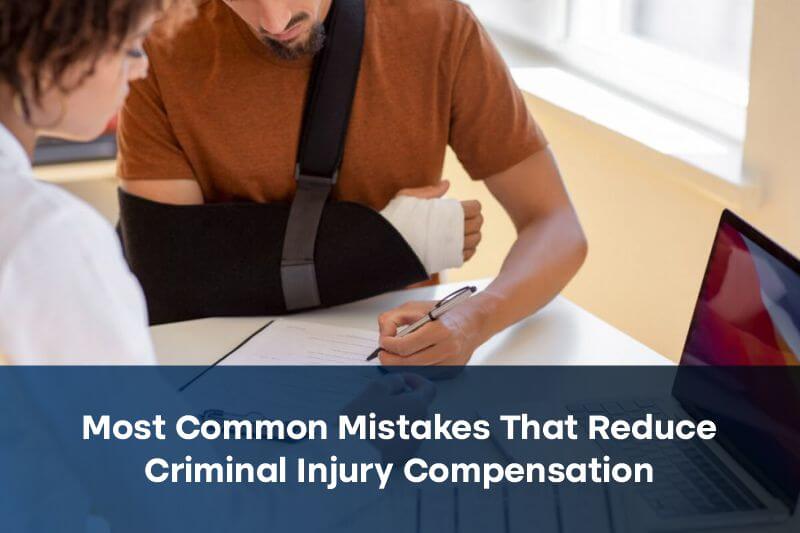
A single missed deadline or an incomplete medical report can quietly strip thousands of pounds from a claim before a victim even realises what has happened. Every year, people who have already survived a violent crime lose out on the financial support they are entitled to, not because their claim lacks merit, but because of avoidable errors made during the application process. Criminal Injury Compensation exists to help victims rebuild their lives, yet the process is far less forgiving than most people expect.
This article explains the most common mistakes that reduce Criminal Injury Compensation awards, why they happen, and how claimants can avoid them. It covers eligibility requirements, evidence preparation, procedural pitfalls, and the practical steps that protect a claim from the moment an incident occurs to the day a final decision is issued. Readers who understand these pitfalls in advance stand a far stronger chance of securing the compensation they deserve.
What Is Criminal Injury Compensation and Who Can Claim It
Criminal Injury Compensation is a form of financial redress paid through the Criminal Injuries Compensation Authority (CICA) to people who have suffered physical or psychological harm as a direct result of a violent crime in England, Scotland, or Wales. It covers victims of assault, sexual offences, domestic violence, and other crimes of violence, and in certain cases extends to family members of victims who have died as a result of a crime.
Eligibility for criminal injury compensation depends on several factors, including whether the crime was reported to the police, whether the application was submitted within the required time limit, and whether the claimant has any relevant unspent convictions that could affect the award. Many people assume that simply being a victim of crime is enough to guarantee a payout. In reality, CICA applies strict eligibility criteria, and claimants who misunderstand these rules often submit applications that are rejected outright or reduced significantly.
Understanding eligibility for criminal injury compensation before submitting an application is one of the most effective ways to avoid disappointment later. This is where instructing experienced Criminal Injury Claim Solicitors early in the process becomes valuable, as they can assess a case against CICA’s criteria before any paperwork is filed.
Missing Deadlines and Reporting Delays That Damage a Claim
The Two-Year Time Limit
CICA generally requires applications to be submitted within two years of the incident, or within two years of the victim turning 18 in cases involving minors. Claimants who delay contacting a solicitor, wait for a criminal trial to conclude, or simply are not aware of the deadline frequently find their application time-barred. While CICA does have limited discretion to accept late claims in exceptional circumstances, this discretion is applied narrowly, and relying on it is a risky strategy.
Delayed Police Reporting
CICA expects victims to report the crime to the police as soon as reasonably possible. A long, unexplained gap between the incident and the police report raises questions about the credibility of the claim and can lead to a reduced award or outright refusal. Victims who are unable to report immediately due to trauma, fear, or medical incapacity should ensure this reasoning is clearly documented and communicated within the application, since CICA does account for such circumstances when properly explained.
Weak or Incomplete Evidence for Criminal Injury Claims
Evidence is the backbone of every successful application, and gaps here are among the most damaging mistakes claimants make.
Insufficient Medical Documentation
CICA assesses awards based on the severity and permanence of injuries, and this assessment relies almost entirely on medical evidence. Claimants who fail to obtain a detailed medical report, or who submit records that do not clearly link the injury to the criminal incident, often receive lower awards than their injuries actually warrant. A GP letter alone is rarely sufficient for anything beyond the most minor physical injury. Specialist reports, particularly for psychological harm such as post-traumatic stress disorder, carry significant weight and should be obtained wherever possible.
Overlooking Psychological Injury
Many claimants focus solely on physical injuries and fail to document the psychological impact of the crime, such as anxiety, depression, or PTSD. Since CICA compensates for psychological harm under its tariff scheme, omitting this evidence means leaving money on the table. A formal diagnosis from a psychiatrist or clinical psychologist strengthens this part of a claim considerably.
Failing to Keep Financial Records
Claims for loss of earnings, medical expenses, or care costs require supporting documentation such as payslips, invoices, and receipts. Claimants who cannot demonstrate their financial losses with clear paperwork frequently see these elements of their claim reduced or rejected. Keeping an organised record from the outset, including travel costs to medical appointments and prescription charges, protects the full value of the claim.
Gathering strong evidence for criminal injury claims from the earliest possible stage gives an application the best chance of reflecting the true extent of harm suffered.
Errors in the Application Form That Lead to Reduced Awards
Inconsistent or Vague Descriptions of the Incident
CICA cross-references the account given in the application with police records and medical notes. Discrepancies, even minor ones caused by innocent memory lapses, can be interpreted as inconsistencies that undermine credibility. Claimants should describe the incident as accurately and consistently as possible across every document submitted.
Failing to Disclose Relevant Information
Some applicants omit details about prior convictions, previous claims, or pre-existing medical conditions, either through oversight or out of concern that disclosure will harm the claim. CICA conducts its own checks, and undisclosed information that later comes to light can result in the application being refused entirely, even where it would not otherwise have significantly affected the award. Full and honest disclosure, guided by professional advice, is always the safer approach.
Incorrect Tariff Selection
CICA compensation is calculated using a tariff scheme that assigns fixed amounts to specific categories of injury. Claimants who select the wrong tariff category, or who fail to claim for multiple applicable injuries, frequently under-claim. Understanding how the tariff applies to a specific set of injuries requires familiarity with CICA’s detailed scheme, something that criminal injury lawyers UK wide deal with regularly and that most claimants encounter for the first time when completing their own form.
Misunderstanding the CICA Claim Process and Its Requirements
Underestimating the Complexity of the Process
The criminal injury claim process is often assumed to be a straightforward form-filling exercise. In practice, it involves coordinating medical evidence, police liaison, financial documentation, and detailed legal argument around eligibility and tariff calculation. Claimants who treat the application casually, rather than as a formal legal process, are more likely to make errors that reduce their final award.
Responding Poorly to CICA Requests for Further Information
CICA frequently requests additional evidence or clarification after an initial application is submitted. Missing these follow-up deadlines, or providing incomplete responses, can stall a claim or lead to a decision being made on limited information. Prompt, thorough responses keep a claim moving and ensure the caseworker has everything needed to award fair compensation.
Not Understanding How Long a Criminal Injury Claim Takes
How long does a criminal injury claim take is one of the most common questions claimants ask, and unrealistic expectations around timing can lead to frustration and rushed decision-making. Straightforward claims may resolve within twelve months, while complex cases involving significant psychological injury or contested liability can take considerably longer. Claimants who rush the process to speed things up, by submitting evidence before it is complete, often do so at the cost of the final award.
Failing to Appeal or Review a CICA Decision Correctly
Accepting a Low Award Without Challenge
Many claimants accept CICA’s initial decision without realising they have the right to request a review. Reviews must generally be requested within 56 days of the decision, and claimants who miss this window lose the opportunity to challenge an award that may not accurately reflect the severity of their injuries. Common CICA claim mistakes at this stage include accepting a settlement out of a desire to close the process quickly, rather than assessing whether the award genuinely reflects the harm suffered.
Submitting a Review Without Fresh Evidence
A review request that simply restates the original application, without addressing why the decision was wrong or providing new supporting evidence, is unlikely to succeed. Effective reviews require a clear legal argument, often supported by additional medical reports or clarified financial evidence, explaining precisely why the original award should be increased.
Missing the Tribunal Appeal Deadline
If a review decision remains unsatisfactory, claimants have the right to appeal to the First-tier Tribunal. This step has its own strict deadlines and procedural requirements. Claimants unfamiliar with tribunal processes frequently miss these deadlines or present their case in a way that does not meet the tribunal’s evidential standards, closing off what may have been a legitimate route to a fairer outcome.
How to Maximise Criminal Injury Compensation and Avoid Costly Errors
Instruct Specialist Legal Support Early
Engaging criminal injury lawyers UK claimants can trust, at the earliest possible stage, is one of the most reliable ways to avoid the mistakes outlined above. Specialist solicitors understand CICA’s eligibility rules, tariff scheme, and evidential expectations in detail, and can identify gaps in a claim before they become costly. Claiming compensation after a criminal injury does not need to be navigated alone, and professional guidance consistently improves outcomes for claimants.
Build a Comprehensive Evidence File From the Start
Claimants should request copies of police reports, retain all medical correspondence, and keep a running log of financial losses connected to the incident. This proactive approach prevents the last-minute scramble for evidence that so often weakens an application.
Understand the Full Scope of Recoverable Losses
Many claimants are unaware that criminal injury compensation claims can include loss of earnings, care costs, and specialist treatment costs, not just a payment for the injury itself. Failing to claim for these additional losses is one of the most overlooked mistakes that reduce compensation claims, and specialist advice helps ensure every recoverable element is included.
Respond to Every CICA Communication Promptly and Fully
Treating every letter or information request from CICA as time-sensitive, and responding with complete, accurate information, keeps a claim on track and reduces the risk of a rushed or incomplete decision.
Why Professional Guidance Makes a Measurable Difference
The CICA claim process is procedurally rigid, evidentially demanding, and unforgiving of delay. A claimant navigating it without support is often unaware of exactly what evidence will strengthen their case, which deadlines carry legal weight, and how the tariff scheme translates their specific injuries into a monetary figure. These are not failures of effort or honesty; they are the natural result of a legal process that most people encounter only once in their lives, at a time when they are also recovering from trauma.
Working with experienced Criminal Injury Claim Solicitors gives claimants access to that specialist knowledge from the outset. A solicitor familiar with CICA compensation claims can assess eligibility accurately, identify the correct tariff categories, coordinate medical and financial evidence, manage deadlines, and challenge a low award through review or appeal where appropriate. This support does not change the facts of a case, but it ensures those facts are presented in the way CICA requires to reach a fair and accurate decision.
Avoiding the mistakes covered in this article protects a claim’s value at every stage, from the initial police report through to a final CICA decision or tribunal outcome. Claimants who prepare thoroughly, disclose fully, meet every deadline, and present strong evidence give themselves the best possible chance of receiving compensation that genuinely reflects the harm they have suffered.
If you or a family member has been affected by a violent crime and you are considering a claim, do not navigate the CICA process alone. JIVA Solicitors provides dedicated, experienced support for Criminal Injury Claim Solicitors work across England, Scotland, and Wales, guiding clients through every stage of their application with the care and legal precision the process demands. Contact JIVA Solicitors today to discuss your circumstances and find out how professional guidance can help protect the value of your claim.